

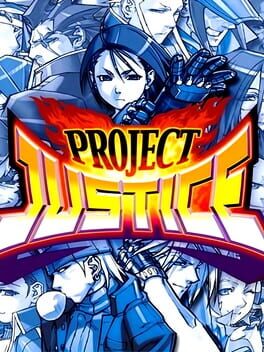
About
Project Justice is the sequel to Rival Schools: United By Fate. Project Justice's fighting system is lifted from the original Rival Schools, with some notable changes. The game continues to be a team fighter, but has teams of three characters instead of two. This allows another Team-Up attack to be used in a fight, but also adds a new type of attack, the Party-Up, initiated by pressing any three attack buttons. The Party-Up is a three-person attack that varies based on what school the character initiating the attack is from. The additional partner also allows players to cancel an opponent's Team-Up Special by inputting a Team-Up command of their own. This initiates a short fighting sequence between one character from each team. If the person initiating the sequence gets the first successful hit in during the sequence before time runs out, the Team-Up they are caught in will be canceled, and the game switches back to the main fight; if the opposing player gets the first hit or time runs out, the Team-Up continues as usual. Additionally, the 'vigor' meter in Project Justice is limited to 5 levels (down from 9 in Rival Schools), with Party-Ups requiring all 5 levels, Team-Ups continuing to cost two levels, and any attempts (successful or not) to cancel a Team-Up costing one level. Also carrying over from the first game, the Dreamcast port of Project Justice in Japan includes a character creation mode that allows a player to create their own fighters who can be used in all modes except for single-player. However, the character creation in Project Justice is packaged as a board game, taking place during an inter-school festival, rather than a date sim game like in Rival Schools. As with School Life Mode in the original Rival Schools, though, this boardgame is not included in non-Japanese ports of Project Justice due to the amount of time it would take to translate the mode. Instead, several unlockable sub-characters were included in these ports, built from the character creation parts in the Japanese version.
- Developer
- Capcom
- Publisher
- Capcom
- Genres
- Fighting
- Modes
- Single player, Multiplayer
- Perspective
- Side view
- Age ratings
- ESRB T
- IGDB rating
- 81 / 100 (17 ratings)
- Also known as
- Moero! Justice Gakuen
Release dates
| Platform | Release |
|---|---|
| Arcade | |
| Dreamcast | · Japan · Europe · North America |
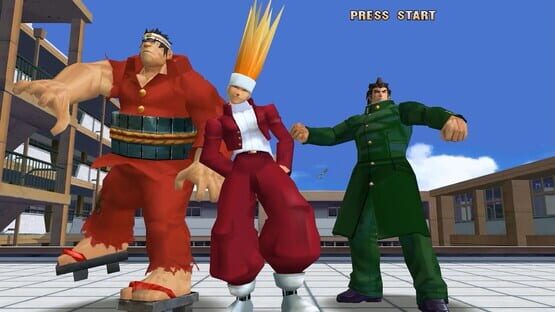
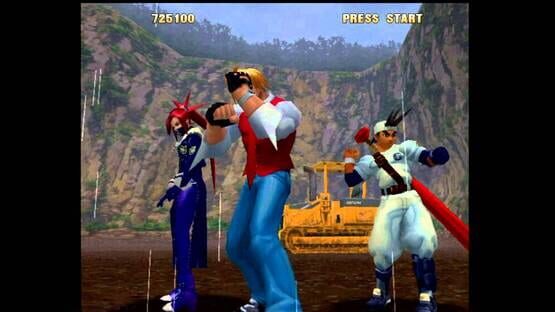
Screenshots
Related games
Capcom Fighting Collection 2
PS4 · PC · XONE · Switch
Rival Schools: United by Fate
Arcade · PS3 · PS1 · PSP
Shiritsu Justice Gakuen: Nekketsu Seishun Nikki 2
PS3 · PS1 · PSP
Body Blows
Commodore CDTV · DOS · Amiga
Red Earth
Arcade
Power Stone 2
Arcade · PSP · DC
Tekken Advance
GBA
Samurai Shodown V
Arcade · neogeoaes · XBOX · PC
Capcom vs. SNK: Millennium Fight 2000
Arcade · DC
Fire Pro Wrestling
GBA
Marvel Super Heroes vs. Street Fighter
Arcade · Saturn · PS1
The King of Fighters XI
Arcade · PS3 · PS2
Game data and images from IGDB. Names and artwork belong to their respective owners.